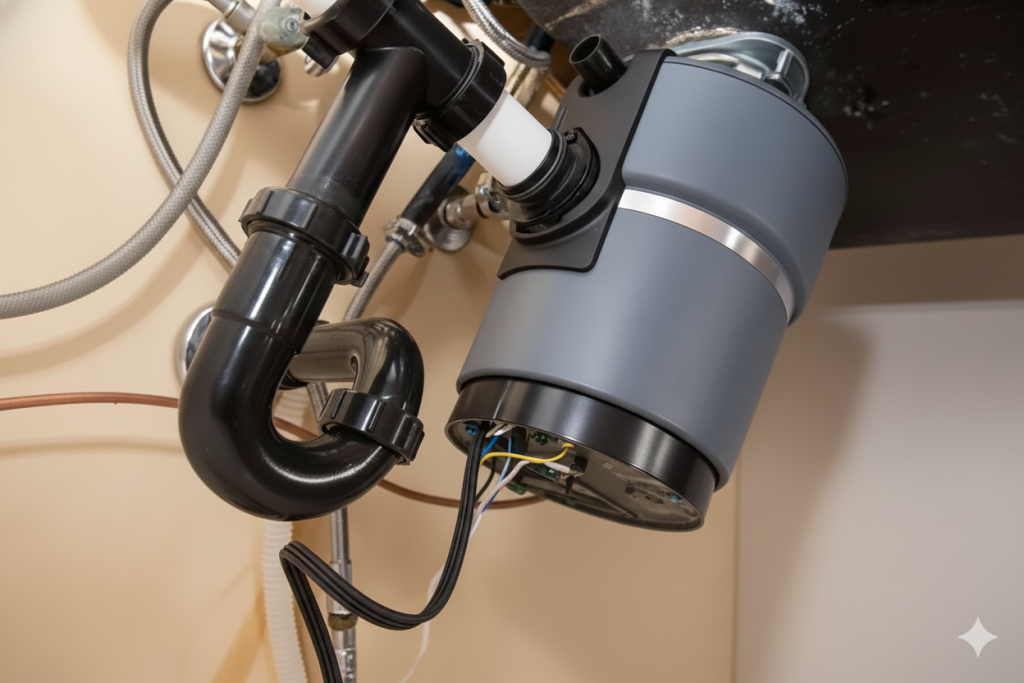
It is one of the most hardworking appliances in your kitchen, yet the garbage disposal is also the most misunderstood. Many homeowners treat it like a “black hole” for food waste, assuming that if it fits down the drain, the disposal can handle it.
In reality, a garbage disposal is not a trash can. It’s a finely tuned machine designed only for light food residue. Feeding it the wrong items can lead to jammed blades, burnt-out motors, and expensive visits from a plumber.
To keep your kitchen running smoothly, here are the 10 things you should never put down your garbage disposal.
1. Fats, Oils, and Grease (FOG)
This is the “Golden Rule” of plumbing. While grease might be liquid when it’s hot in the pan, it solidifies as soon as it hits your cool pipes. Over time, this creates a waxy buildup that traps other food particles, eventually causing a total blockage that no plunger can fix.
- The Fix: Pour grease into an old jar or can, let it harden, and throw it in the trash.
2. Coffee Grounds
Coffee grounds are deceptive. They look fine and powdery, but once they are saturated with water, they turn into a thick, sediment-like paste. This “sludge” settles in the traps of your pipes and is one of the most common causes of slow-draining kitchen sinks.
3. Eggshells
There is an old myth that eggshells sharpen disposal blades. This is false. The thin, papery membrane on the inside of the shell can wrap around the impeller or the grind ring. Furthermore, the shells themselves are ground into a sand-like grit that sticks to grease and creates clogs.
4. Pasta, Rice, and Bread
Think about what happens when you cook pasta or rice: it expands in boiling water. The same thing happens in your pipes. Even after these items are “ground up,” they continue to absorb water and swell, creating a sticky mass that can choke your drainage system.
5. Stringy or Fibrous Vegetables
Vegetables like celery, corn husks, asparagus, and onion skins are a disposal’s worst nightmare. The long, tough fibers can act like hair, tangling around the motor and jamming the spinning parts.
6. Fruit Pits and Seeds
If you can’t cut it with a kitchen knife, your disposal can’t grind it. Peach pits, cherry stones, and even unpopped popcorn kernels are essentially rocks. Dropping one in will, at best, make a deafening noise, and at worst, shatter your disposal’s internal components.
7. Potato Peels
Potato peels are heavy in starch. When ground up, they turn into a thick, glue-like paste. This paste often sticks to the sides of the pipes and prevents other food waste from passing through.
8. Bones
While some high-end, heavy-duty disposals claim they can handle small chicken bones, it’s generally a bad idea. Most residential models aren’t powerful enough. Bones will simply spin around the chamber, wearing down the blades and potentially breaking the seal of the unit.
9. Chemicals (Bleach or Drain Cleaners)
It might be tempting to pour harsh chemicals down the drain to “clean” the disposal, but this can do more harm than good. Strong chemicals can corrode the metal parts and degrade the rubber seals, leading to leaks.
- The Fix: Use ice cubes and lemon peels to clean and deodorize naturally.
10. Non-Food Items
It sounds obvious, but you’d be surprised what plumbers find! Twist ties, rubber bands, pull-tabs from soda cans, and cigarette butts should never go down the drain. These items don’t decompose and are guaranteed to cause mechanical failure.